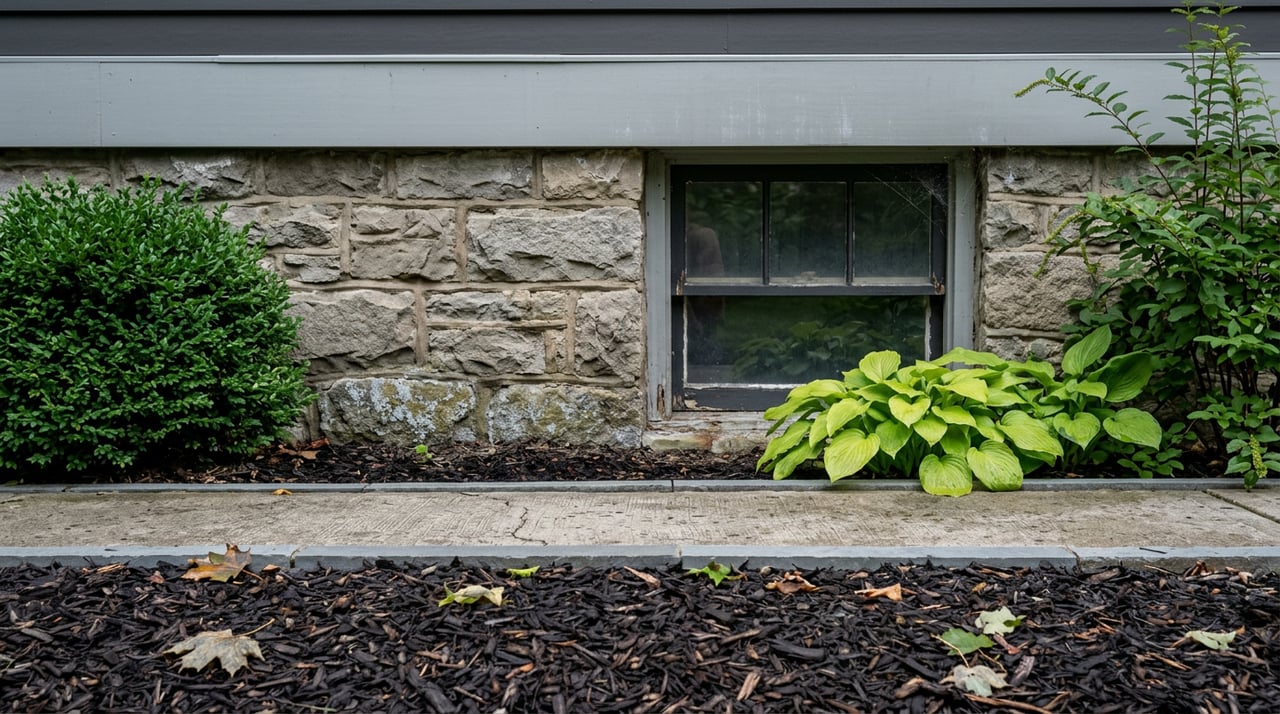
If you're getting ready to list a home anywhere from Blue Bell to Ambler to Collegeville, here's a question worth asking before the sign goes in the yard: why does almost every Seller's Property Disclosure Statement in this county leave the radon box blank, or checked "unknown," in a place the EPA has flagged as its highest risk category? The honest answer isn't that sellers are hiding something. It's that Pennsylvania's disclosure law only requires you to report what you already know, and most sellers here have simply never tested.
That gap between what the law requires and what buyers assume it means is where the real friction sits. Buyers see a clean disclosure form and read it as reassurance. Sellers see a clean form and think they're done. Neither is quite right, and understanding why matters more in Montgomery County than in most parts of the country.
The Geology Doesn't Check Town Lines
Montgomery County sits on part of the Reading Prong, a uranium-bearing granite and gneiss formation that runs through the county's northern and central sections. As that rock breaks down, it releases radon gas, which moves up through soil and finds its way into basements through foundation cracks, sump pits, and gaps around utility lines. The EPA places Montgomery County in Zone 1, its highest risk tier, meaning the predicted average indoor level exceeds the federal action threshold of 4 picocuries per liter.
What makes this a countywide issue rather than a pocket problem is that the geology doesn't respect municipal boundaries. A stone farmhouse in Collegeville and a newer build in Cheltenham can both test high. So can a townhouse in Lansdale or a colonial near King of Prussia. Elevated readings show up in new construction just as often as in a 1910 farmhouse, because the gas comes from the ground the house sits on, not from anything about how or when it was built.
The events that put Pennsylvania on the national radon map happened close to home. In 1984, a construction worker named Stanley Watras kept setting off radiation alarms on his way into work at the Limerick nuclear plant. Investigators eventually traced the source not to the plant but to his own house in Boyertown, where indoor radon levels turned out to be extraordinarily high. That discovery is the reason radon testing became a routine part of real estate transactions across eastern Pennsylvania, and it's why the region has stayed unusually attentive to the issue ever since.
Why the Disclosure Form Usually Says Nothing
Pennsylvania's Real Estate Seller Disclosure Law requires sellers to report known material defects, and radon test results fall under that requirement as a hazardous substance disclosure. But the law only compels sellers to share results they actually have. It does not require anyone to test before listing. The Pennsylvania Code's disclosure statement language asks whether the seller is aware of hazardous substances including radon, which is a question about knowledge, not about obligation to investigate.
The practical effect is that most Montgomery County sellers list their homes having never tested, which means there's nothing to disclose. That's not concealment. It's the legal default. The catch is that once a seller does test and gets a result, that number can't be withheld from that buyer, and if the seller keeps a radon mitigation system already installed, that system has to be disclosed too.
So the radon conversation in most Montgomery County transactions doesn't happen at listing. It happens during the buyer's inspection contingency, when the buyer orders their own test and the clock starts running on a much shorter window than most people expect.
What Actually Happens During the Contingency Period
A radon test tied to a real estate transaction is a short-term test, typically a charcoal canister or a continuous monitor, placed under closed-house conditions for 48 to 96 hours. It usually gets added to the home inspection for somewhere between $135 and $200. Inspection contingencies in this market commonly run 7 to 10 days, which means the test, the lab turnaround, and any resulting negotiation all have to happen inside a narrow window.
If the result comes back above 4.0 pCi/L, financing can add urgency of its own. FHA-backed purchases require radon mitigation when levels exceed the action threshold, and VA loans carry their own strict property condition standards. A buyer using either type of financing isn't just asking for a credit as a preference. In an FHA transaction, mitigation stops being optional the moment the number comes back high.
What Mitigation Actually Costs
The number that tends to worry people more than it should is the mitigation estimate. Costs vary by source and by foundation type, but Montgomery County estimates generally fall between $800 and $2,500, with several detailed breakdowns clustering closer to $1,400 for a standard sub-slab depressurization system. Set against what homes in this county typically sell for, even the higher end of that range represents a small fraction of the purchase price, closer to a repaired appliance than a structural concession.
| Line item | Typical range |
|---|---|
| Real estate radon test (48-96 hours) | $135 to $200 |
| Standard mitigation system installation | $800 to $2,500 |
| Share of a typical Montgomery County home's value | Well under 1% |
That context matters because a high radon reading can feel like a crisis in the middle of an inspection period, when in reality it's one of the more predictable and fixable items that comes up in a Montgomery County transaction.
How the Negotiation Actually Plays Out
Once a test comes back elevated, the path forward is fairly standard, and knowing the sequence ahead of time keeps the conversation calm on both sides.
- Get the actual number before deciding anything. A result just above 4.0 pCi/L calls for a different conversation than one at 15 or 20.
- Choose your own certified mitigation contractor rather than accepting one the seller proposes, so you control the installation and the documentation.
- Ask for a specific dollar credit at closing rather than asking the seller to manage the repair themselves. A request framed around a defined number is easier for a seller's agent to bring to their client than an open-ended repair demand.
- After closing, hire your contractor and use the credit to cover the installation. A post-mitigation test confirms the level has dropped below the action threshold.
Sellers who already have a mitigation system installed are in a stronger position than they might realize. A documented system with a post-mitigation test below 4.0 pCi/L becomes a disclosed asset rather than a liability, since it shows the issue was already identified and resolved by a certified installer.
If You're the One Selling
The decision about whether to test before listing is a real one, and reasonable sellers land on both sides of it. Testing ahead of time means you walk into negotiations with information instead of reacting to a buyer's number under deadline pressure. Not testing keeps your disclosure form simple, since there's genuinely nothing to report, but it also means the conversation will almost certainly happen anyway, just on the buyer's schedule instead of yours.
Either way, budgeting mentally for a mitigation credit before you list, even if you never test yourself, tends to make the eventual conversation shorter and less stressful when a buyer's inspector brings back a number.
A Few Straight Answers
Do I have to let a buyer test for radon during inspection? Sellers can't refuse a properly noticed environmental test during a buyer's inspection contingency window. Resistance to a routine test on a property in a Zone 1 county tends to raise more questions than it answers.
Does new construction skip this issue? No. Radon comes from the ground beneath the foundation, not from the age or materials of the house itself, so new builds in Montgomery County test high often enough that skipping the test isn't a reasonable shortcut.
If my home already has a mitigation system, do I need to retest before selling? The system itself has to be disclosed, and a documented post-mitigation result below 4.0 pCi/L is what turns it into a selling point rather than an open question for the next buyer.
Radon in Montgomery County isn't a red flag on any one property. It's a regional fact of the geology that shows up in the transaction whether or not it shows up on the paperwork first. Knowing when and how that conversation happens is the difference between a routine credit request and a week of unnecessary stress on either side of the table.
If you're weighing when to test, how to price a credit request, or what a mitigation system means for a home you're considering, The Collective Real Estate can walk through the specifics with you. Contact Us.
